Lessons from Legendary Investors Amid Market Uncertainty

We stand at a unique economic juncture. For years, conflicting signals often muddied the waters, creating a confusing landscape: strong employment masked weak demand, loose credit existed despite slowing growth, and dovish policy battled rising inflation. These contradictions weren’t just noise; they acted as buffers, often delaying inevitable corrections.

Today, that buffer seems gone. The major risk indicators I track encompass a wide range. They include leading indicators like yield curve inversions and manufacturing PMIs. They also cover credit market stress. Even lagging indicators like employment are now showing cracks. All these indicators are finally pointing in the same direction. This synchronized alignment is what truly concerns me, and it prompts questions I often hear: “Are you ever optimistic? Has it just been doom and gloom for 15 years? Do you even invest, and have you beaten the S&P?”

These are fair questions, especially given my recent cautious tone. My current stance isn’t about predicting doomsday; it’s about recognizing a rare confluence of macroeconomic risks demanding a different approach. And no, I haven’t always been bearish.

(Note: A detailed breakdown of those specific economic signals is in my related Thread post — this blog focuses on the ‘why’ behind my perspective.)

My Investment Pivot: From 2009 Bull to 2021 Pause
For the vast majority of my investment journey, particularly from the market ashes of 2009 through late 2021, I was aggressively bullish. I actively rode one of the most powerful bull markets in modern history. I rotated through sectors and captured significant gains in growth stocks. Yes, I cumulatively beat the S&P 500 benchmark over that extended period. While not every single year was an outperformer, the long-term strategy delivered.

My decision to significantly reduce exposure in December 2021 was driven by two factors. The first was the practical need for liquidity as I was starting a new business venture. The second was a growing unease with stretched market valuations. While timing often involves luck, this move significantly shielded me from the worst of the 2022 drawdown.

The pandemic era became a turning point in my analysis. It prompted a deeper dive into macroeconomics – exploring the mechanics of debt cycles, the true power (and limitations) of monetary policy, and the complex dynamics of inflation. Watching the unprecedented global response, the massive fiscal injections, and the subsequent inflationary pressures made theoretical concepts starkly real.

I began to appreciate the inherent fragility within the economic system when pushed to extremes. Figures like Ray Dalio, whose warnings about debt spirals once seemed abstract, suddenly felt prescient. It also highlighted how quickly conventional wisdom can be overturned. I saw Michael Burry struggle with his 2023 short attempt, then pivot to undervalued Chinese equities like $BABA (which I also briefly traded in the $80s). This reinforced a key lesson: valuation isn’t everything. Overlooked geopolitical and policy risks can dominate fundamentals. This evolving global picture ultimately led me to exit even long-term holdings I previously favored.

Mid 2022 Onward: Tactical Precision Over Board Optimism: Re-entering the market mid-2022 wasn’t a return to broad bullishness. It was about targeted, tactical trades where risk/reward seemed skewed in my favor. This involved:

Selective Shorts: Targeting names showing technical breakdowns and appearing fundamentally overextended, like $TSLA, $BYND, and $SFIX.

Contrarian Longs: Building a significant position in $META. Despite the negative sentiment, its core business strength compared to its valuation seemed deeply misunderstood. I held through the painful drawdown into late 2022/early 2023, even adding significantly to my position. I began scaling out of $META as it recovered strongly through Dec 2024. I eventually exited most of the position around the $600 level in late 2024 or early 2025. The highly speculative assets surge again despite clear signals the Fed wasn’t easing, suggesting market froth was outweighing fundamentals.

Conviction Play: My focus shifted to $CELH, a company I’d followed since 2018 (initially alongside $REED). I saw $CELH as having tremendous potential over the next 5-10 years. I built a position through 2023 and exited entirely after a significant run-up concluded around February 2025. That marked the end of my last major long equity position.

Macro Warnings and the Challenge of Timing from Others
Many smart investors like Druckenmiller, Burry, and Dalio started sounding alarms years ago. They identified significant structural risks that were, and still are, valid concerns. However, their experiences highlight the brutal challenge of timing the market, even when your thesis is fundamentally sound.

Let’s look at their calls:

Stanley Druckenmiller’s Warnings:
In 2022, Druckenmiller warned of a potential “lost decade” for equities, predicting that U.S. stocks could deliver flat or minimal returns over the next 10 years. He attributed this outlook to several macroeconomic shifts, including:

Persistent inflation
Rising interest rates
Deglobalization
The end of easy monetary policy

“We’ve had a tsunami of money since 2009. All of that is going away.”
Druckenmiller, Delivering Alpha 2022

Druckenmiller argued the bull run was built on unsustainable tailwinds — and those are now reversing. He emphasized that the favorable conditions supporting the previous bull market were reversing. These conditions, such as low interest rates and globalization, led to a more challenging investment environment. By 2023, his concern deepened. Speaking at the Sohn Conference, he called U.S. fiscal policy a “horror movie” and warned:

“If current trends continue, we could see a fiscal crisis by 2030.”

• Debt interest could soon exceed defense spending
• No political will to address structural deficits
• Rising risk of a bond market event

Additionally, he cautioned that the Federal Reserve might have declared victory over inflation prematurely. He was concerned that cutting interest rates during a strong economy could cause inflation to resurge. This situation draws parallels to the economic patterns of the 1970s.

Michael Burry $1.6 Billion Short Attempt:

Michael Burry—the legendary investor behind “The Big Short” made headlines again in 2023. But this time, it wasn’t for calling a housing crash. It was for betting big against the broader U.S. stock market. In mid-2023, Burry’s hedge fund, Scion Asset Management, disclosed large short positions. These were through put options on two major index ETFs:

SPDR S&P 500 ETF (SPY)
Invesco QQQ Trust (QQQ)

The combined notional value of these positions totaled $1.6 billion. While headlines focused on the size, it’s important to clarify: that figure represents the exposure. It is not the actual capital at risk. The premiums paid on options are much lower. Still, it was a bold and aggressive stance.

Why Burry Went Bearish:
Burry laid out his macro concerns clearly across interviews and social media:

Inflation would return: In early 2023, he wrote, “Inflation peaked. But it is not the last peak of this cycle… and the US in recession by any definition.”

Recession Risk: He believed the U.S. economy was entering a slowdown masked by lagging data.

Overstretched Valuations: Burry saw the tech rally—particularly in the Nasdaq-100 as reminiscent of previous market bubbles.

Passive Investing Bubble: He’s been warning since 2019 that passive index flows distort market signals and create dangerous concentration in large-cap names.

To Burry, all of this added up to one conclusion: stocks were headed for a fall.

What Happened Next:
Unfortunately for Burry, markets had other plans. By the third quarter of 2023, both the S&P 500 and Nasdaq-100 had rallied sharply. The AI boom and renewed bullish sentiment powered tech stocks, undermining Burry’s thesis—at least in the short term. According to reports, Scion closed the short positions, and some analysts estimate the fund took a loss of around 40% on the trade.

The Semiconductor Shift:
After closing his broader market shorts, Burry didn’t sit still. He turned his bearish sights on another sector: semiconductors. Through new put options on the iShares Semiconductor ETF ($SOXX), Burry bet against a sector riding high on AI optimism. Yet again, the timing was rough—Nvidia and other chipmakers continued to surge, fueled by strong demand and investor enthusiasm.

Ray Dalio’s Structural Warnings:

Ray Dalio offers a similar lesson in macro-based caution. He’s been sounding alarms about market fragility for years, pointing to prolonged ultra-low interest rates and historical levels of quantitative easing. Like Burry and Druckenmiller, Dalio saw the structural risks inherent in the system. But unlike Burry, he didn’t place massive short bets trying to time a collapse. Still, his belief in powerful macro headwinds was strong. This conviction influenced Bridgewater’s positioning and led to underperformance at a time when markets were fueled more by liquidity and policy than traditional logic.

The Takeaway: Timing vs. Thesis
In theory, these elite macro investors were fundamentally right about many of the underlying risks: valuations were stretched, debt levels were unsustainable, productivity was slowing.

But timing matters immensely.

The primary reason their “doomsday” scenarios were early was due to unprecedented policy responses. In 2018, the Fed tried to hike and normalize policy, but the market panicked, and Powell backed off in 2019. Then COVID hit, and the U.S. injected $5 trillion in stimulus, rates were cut to zero, and the Fed ran historic QE. It wasn’t just stimulus; it was a liquidity shockwave. Every asset surged: crypto, meme stocks, tech, housing. Years of growth were pulled forward. The crash wasn’t canceled; it was delayed, kicked down the road by artificial means.

This is why Burry’s concerns in 2023, while valid, weren’t what the market was pricing in. Markets don’t move on fundamentals alone. They move on liquidity, positioning, and narrative momentum. In 2023, those forces drowned out macro caution, and Burry’s thesis got buried in the noise. His short became a textbook example of one of investing’s most brutal lessons: being early can still mean being wrong, even if you’re fundamentally right. Consider Warren Buffett in 1999, who warned about dot-coms being untethered from reality, yet the Nasdaq rallied another 80% before crashing. Buffett sat in cash; Burry tried to time the top.

Ironically, I think Burry is making another major misstep now by going long on China in this environment. He seems to believe China will be insulated from global risk, but I see it differently: U.S. market risk is global risk, and no major economy is truly shielded from it.

Why It’s Different Now — And Much Closer

Today, we’re out of tools.

• The Fed can’t cut aggressively without reaccelerating inflation.
• It can’t hike without triggering a credit event.
• It’s boxed in.

The biggest underpriced risk is Debt servicing.

• Interest on U.S. debt is expected to exceed $1.7T/year soon — more than Medicare or defense.
• By 2026, it will eat up ~15% of the federal budget.

Congress has no easy fix:
• Default? Global depression.
• Raise taxes? Kills demand.
• Print? Destroys the currency.
• Yield curve suppression? That’s hoping for a soft landing in a storm.

This isn’t politics — it’s pure math. And it’s catching up fast.

Another overlooked warning sign is the banking sector

You’ll hear, “Banks are cheap—strong earnings, high liquidity, solid metrics.” And sure, on paper, that’s all true. But cheap valuations don’t happen by accident. They’re a signal.

Banks are being discounted for a reason:
• Hidden credit risk in commercial and consumer debt
• Unrealized losses from long-duration assets still on the books
• Off-balance-sheet derivative exposure
• Liquidity risks if higher-for-longer rates start to break something

Banks may look stable. However, they sit at the center of a fragile financial system. This system is more exposed than most people realize. If anything cracks, banks are the first domino and usually the last to fully recover.

The market isn’t ignoring banks. It’s avoiding them.

Investors prefer to chase the MAG7 and growth stories. They don’t do this because they’re cheap. They are the only things still producing returns in a distorted, risk-heavy environment.


Where I’m Positioned Now

I’m cautious and I hold:

• Cash (providing optionality)
• Gold (traditional hedge)
• Engaging in selective short term equity trades (income)

I’m not chasing AI or crypto. I am taking profits and understanding it’s important to underperform during this market. I hedge when appropriate. I’m not permanently out, I’m waiting for better odds.


Final Thoughts: Long-Term Bull, Short-Term Realist

I’ve been long the U.S. market far longer than I’ve been cautious. I still believe in American innovation, but belief doesn’t override math. Today’s market is pushing up against macro limits: rising debt costs, policy exhaustion, and cyclical pressures. Ignoring these signals isn’t optimism—it’s willful blindness to what’s coming.

Will this market grind higher? Absolutely. Liquidity and narrative can defy logic for extended periods. My experience navigating the COVID crash taught me that timing involves both analysis and luck. During the crash, I stayed invested anticipating government backstops. I pivoted bearish in late 2021. I also tactically traded the subsequent swings, including the AI wave via $PLTR, which I exited near the end of Feb 2025. It also taught me the importance of knowing when not to press your bets.

Timing isn’t always skill. Sometimes, it’s knowing when to stop pressing.

Final Thoughts: The Patience Afforded by a Profitable Cycle

Am I early in my caution? Maybe. But my perspective is shaped by how the last few years unfolded. Exiting near the 2021 peak locked in substantial gains from a historic bull run. I re-entered near the lows of 2022 and early 2023. This allowed me to capitalize on the unexpected strength of the AI-driven rally. That “double dip”, catching gains on both ends of the cycle—gives me a different vantage point. It also reinforces the one habit most investors never master: patience.

This isn’t new territory for me. After stepping out in late 2021, I waited six months before re-entering. I dollar-cost averaged on the way down, then got lucky when AI momentum kicked in earlier than expected. But that rally taught me something else, don’t overstay when risk and reward disconnect. I’m willing to step back again, for another year, and let the market recalibrate.

Once you’ve harvested meaningful profits, the need to squeeze every last point of upside fades. The priority shifts to protecting capital—especially when macro risks are no longer scattered but aligned. This isn’t about predicting a crash tomorrow. It’s about understanding the current risk/reward setup. It simply doesn’t warrant full exposure. This is particularly true for someone who’s already been through the full cycle.

That said, I’m not permanently sidelined. If job losses pile up, and the Fed faces political pressure to cut, the equation changes. This holds true even with inflation still elevated. I’d redeploy capital as real yields compress and policy shifts again. But any rally sparked by emergency cuts wouldn’t erase the deeper structural problems, it would just delay them.

That’s why I’m looking at long-dated puts. Not as a gamble, but as a defined-risk hedge in a market that refuses to price in fiscal reality.

I know a lot of retail investors are still recovering from the FOMO-driven missteps of 2021. Many bought into hype and DCA’d into broken narratives. Now that they’re finally back to breakeven or modest gains—they’re impatient, even defensive. Some get personal when I challenge the market’s sustainability.

Ironically, I was the one warning about the bubble in 2021. And now? We’re right back to those extremes. So no—I’m not re-entering at these levels. I’ll wait until we get closer to 4,000 on the S&P. I will also wait until government policy creates a new asymmetric setup. I can then lean into this setup. Successful investing isn’t about staying aggressive at all times. It’s about knowing when prudence trumps action.

I’ve done this before—exiting high, re-entering low, and walking away again when risks overwhelmed rewards. That discipline paid off. And once you’ve seen the power of patience, you’re never in a rush again.


Maximizing Your Investment Returns: How to Avoid Hidden Costs and Boost Your Portfolio’s Performance

The stock market has been sluggish in recent weeks: the indexes are close to the lows of 2017 and 2018. The frightening news cycle and frenzied financial professionals believe that the stock market may fall even lower. Recent data and business closures demonstrate that a greater recession is possible. I believe that this recession, or the fear of such a recession, is positive for the U.S. economy. Let us not forget that we have already seen signs of life, in every economic recovery, to be greatly disappointed. No matter where the short-term equity market goes, the long-term strategy will always be effective. Two years from now, the stock market may still decline by 30%, but 20 years from now, the market will historically yield at least 10%.

As you probably know, research shows that professional investors have difficulty outperforming the market with stock selection. But as with any statistical data, be cautious about academic topics that have selected bias. Most of these data refer to professional investors as any person who can open a fund. Many well-connected or trust fund babies like Chelsea Clinton’s husband (Marc Mezvinsky) always underperform the market. Pension and endowment funds received 80 cents for every $1 invested by Marc Mezvinsky. Most of these professionals are rich enough to use their capital or well enough connected to collect money from close networks. These affluent and connected professional groups rarely perform the required investment due diligence. Buffet famously said, “Wall Street is the only place that people ride to in a Rolls Royce to get advice from those who take the subway.”

Related image
Losing out on other opportunities

In this regard, there are many hidden costs to stock-picking. For example, in 2017 more retail investors bought REIT stocks because it was an outperforming the index average. The Real Estate Investment Trusts (REITs) were the best performing industry from 2010 to 2017,the entire industry quickly turned into one of the worst investment opportunities during and after the crash. Malls were a major industry to buy between the 1970s and late 1990s; most developers focus their efforts to build out malls that are quickly becoming empty shells and debt load. If you didn’t know much of this real estate information before reading this post, then you are one of these stock pickers that are at risk of losing money.

Nevertheless, too many people consider themselves a stock-picking genius. The majority of people will be smart enough to invest, but being smart does not offset a higher return. Being a business-orientated or entrepreneurial individual doesn’t make you more qualified as an investor either. Being an investor is a profession, such as being a firefighter. If your house is on fire, the least qualified person to save your house from fire – it’s you.
Anyone can learn about fire safety, but that doesn’t mean they have the knowledge to use that information to save themselves from a fire.

Many people are unwilling to apply due diligence to investments. Anybody can outperform for a few years in a bullish time. The common characteristics of retail stock pickers are individuals who lack financial skills, often have short-term benefits in their portfolio, and lack of long-term stocks.

The Hidden Costs of Trading – FIX Flyer
The Investment Hidden Fees

What are the other hidden fees of stock picking? I called it the T&T problems Time & Taxes

  1. The first cost is Time. If you have little knowledge and try to spend time learning, then you are racing against the clock against someone that is simply more knowledgeable and prepared. Novice investors spend time choosing stocks and never learn more about their investment through due diligence. Studying makes you informative, but it’s a long process before you get really knowledgeable to execute an investment. Knowledge originates primarily from information and experience.
    Everyone on the internet is informed about politics, but not everyone is knowledgeable. If TV ran the news on Biology and Chemistry 24/7, like political news, we would all feel like we can discuss science topics like we are all Ph.D. Scientists. I have another blog which is going to talk about the difference of being informed and knowledgeable. If you continue to choose stocks without being fully informed, you will underperform the market by 5% or more per year (50% in potential missed earnings over 10 years)
  2. The second cost is Tax, if you’re trading in a taxable account. The gap between short- and long-term capital gains is significant. When trading shares, it may be tempting to exit positions, particularly well after just a few months. Trading often leads to greater tax costs and I avoid it. Capital tax gain taxes are 0 to 20% vs income taxes that can be about 25% to 40%. Consider the amount of money you will leave on the table if you pay income tax on your investment performance. My investment strategy is to target long term positions over short term capital gains. Most people are thrilled to receive short-term profit (but they don’t realize that they pay income taxes on it).
Image result for hidden fees investment
Time & Taxes

Taxes and time can seriously erode performance, particularly for high-frequency stock traders in higher tax brackets. Most economic research studies show these and other mistakes made by the ordinary investor can reduce returns by 4% or more a year relative to a stock index (which hasn’t included the short-term tax fees).

How to invest in stocks for beginners: Begin investing within 30 days

It’s important to understand that there are two main approaches to investing in the stock market. The first is passive investing, which aims to achieve the average market return of around 7-8%.

The other approach is to invest in individual stocks with the goal of outperforming the S&P 500. This approach requires more time and effort, as it involves researching and selecting specific stocks rather than just investing in a broad index. If you have any specific questions or need clarification on anything mentioned in this post, feel free to reach out to me at TomNguyen@agarwoodcapital.com.

1. Decide if you want to put in the time to beat the stock market average returns (Week 1)

Passive investing- The goal of passive investing is to achieve average stock market returns, which are estimated to be around 7% to 8% over the last 100 years. To start passive investing, it is recommended to buy a mutual fund or ETF that represents the S&P 500. This can be done through robo-advisors or standard investment advisors, who provide these mutual funds and ETFs.

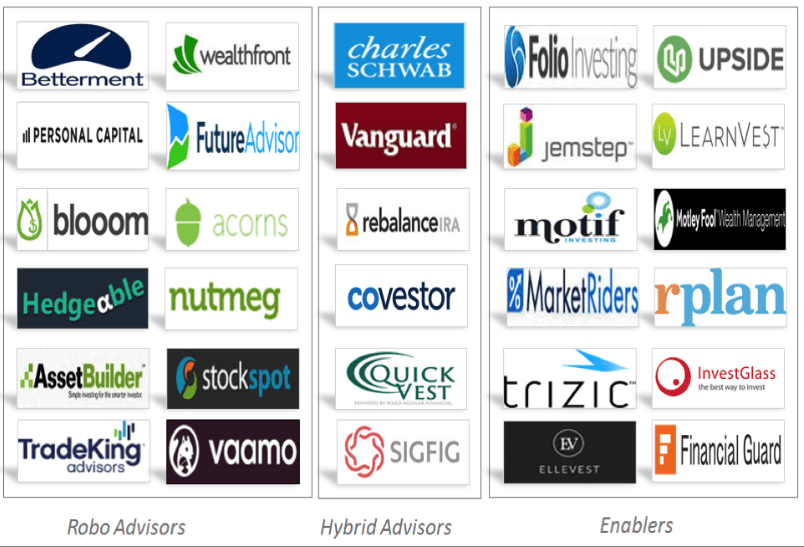
Robo-Advisor Services
  • When choosing a service for passive investing, it is important to go with low-cost options such as Vanguard or Fidelity, or robo-advisors like Wealthfront or Betterment. Management costs should be below 1% of your total asset value.
    • A note about indexes: It is also important to note that different indexes represent different segments of the market. The S&P 500 represents the 500 largest companies in the US, and is therefore often used as a benchmark for the overall performance of the US stock market. Other indexes, such as the Dow Jones (DJI), only include a small number of companies and may not be representative of the broader market. This is why the S&P 500 is considered the standard benchmark instead of other indexes.

Active investing- The goal of active investing is to pick stocks and outperform the stock market average, which is represented by the S&P 500. Active investing requires putting in the time to research and analyze both individual stocks and the overall market. If you choose to become an active investor (or the DIY approach, as I like to call it), you will need to learn key aspects for analyzing a stock and strategies for ending the year with returns above the stock market average.

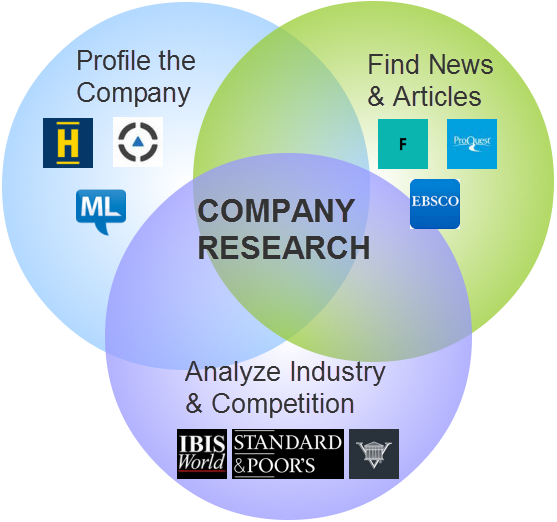
  1. Learning about an industry, company, and competitors
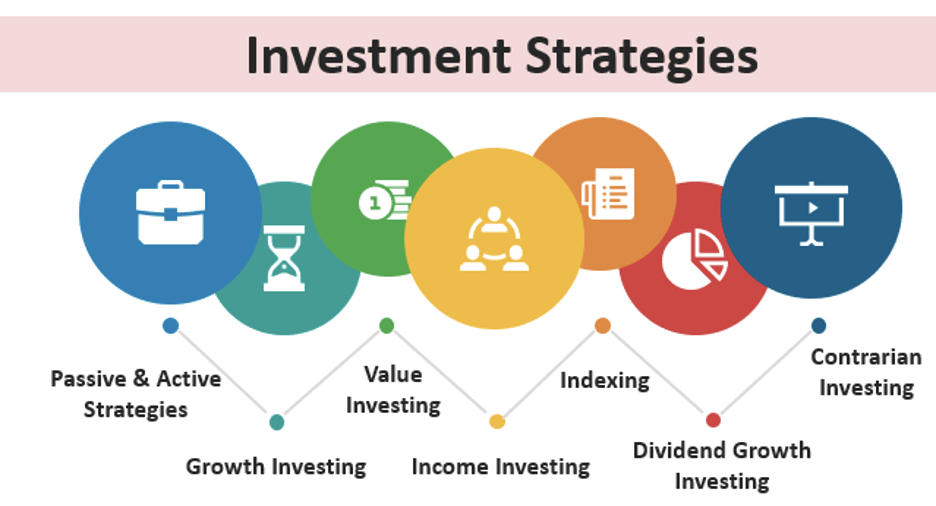
  2. Learning about investment strategies can outperform the average return 
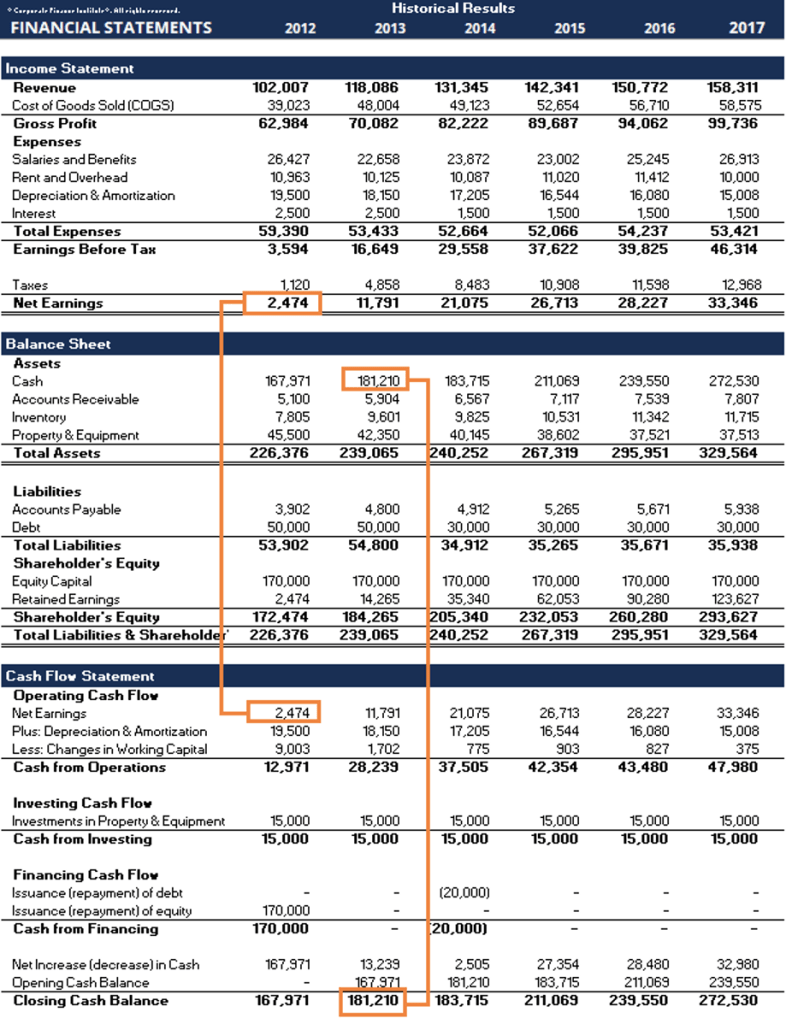
  3. Learning how to read and create financial statements

If becoming an active investor is the path you want, then continue reading.

Image result for active investing

2. Start by reading about industries and companies that are the most familiar to you. (Week 2)

It’s important to choose a business industry that is easy for you to comprehend, as this will make your investment journey more enjoyable and successful. One way to do this is to select an industry that is related to your profession or one that you have experience with through your regular purchases.

For example, if you work in the apparel industry, you may find it easier to understand the operations of an apparel company. The apparel industry is a multi-billion dollar investment opportunity, but it can also be highly competitive. To succeed in this industry, it’s important to understand the different distribution channels that are available, such as physical stores and online platforms. For example, Under Armour is a well-known apparel business that sells its products through both physical and digital channels.

As you begin your active investment journey, it’s important to learn as much as you can about the company you are interested in. This includes understanding its products, management, and business risks. It’s also a good idea to ask critical questions and do your own research to ensure that you have confidence in your investment. Remember to start with the basics and learn about the company before diving into financial statements, as this will help you to better understand the financial results. Overall, the key is to find the perfect ingredients for a successful investment by doing thorough research and asking the right questions.

Here are some initial questions I might ask about Under Armour:

  • Why is Under Amour (UA) a better investment than its competitors?
  • What makes UA better than other apparel businesses?
    • Does UA have any patents on their clothes and shoes?
  • Who manufactures UA clothes?
    • Is there a contract or partnership from the manufacturer? 
    • Why was this manufacturer selected?  
  • Who are UA shipping partners?
    • Is UA shipping partner contract?
  • Does UA have its own stores? Why does UA have its own stores?
    • How many stores does UA have?
    • How many retail partnerships do they have? 
  • Did Under Armour ship their apparel from a warehouse, and from which warehouse?
    • How did UA decide to pick this warehouse?
    • Where were the clothes made?
  • Who designs UA’s clothes?
    • What is the designing strategy, do they create athleisure clothes or not? 
    • Who’s the design team leader, how long did they work at the firm? Do they have experience at other firms?

Notice that I did not list any financial or math-related questions. The point of this exercise is to get familiar with the industry and business. As you are learning, there will be more financial jargon and it will get more confusing. Do not be discouraged. If it is confusing, you are learning.

Image result for business industry and company research

3. Learn about investment strategies (Week 3)

There are many investment strategies to choose from, but one that has proven to be effective in achieving above-average market returns is value investing. This strategy involves identifying undervalued companies and investing in them with the expectation that their value will increase over time.

Value investing has been used successfully by many billionaire investors, including Warren Buffet, Seth Klarman, and Bill Ackman. It is considered a solid foundation for investors to learn about other investment strategies and can be a powerful tool for building long-term wealth. If you are new to investing, learning about value investing and how to apply it to your portfolio can be a valuable way to start building your investment strategy.

What exactly is value investing?

Value investing identifies companies with a current market price that is less than their intrinsic worth, which means the stock or company is “undervalued.”   

How do I determine the value of a stock and know if a stock is undervalued?

The discounted cash flow – this method provides the net present value by estimating the company’s future profitability to help determine the company’s values. The discounted cash flow will help provide a range of value to the entire business. 

Another way to find undervalued stocks is by using the valuation ratio. A valuation ratio shows the relationship between a company’s market value or its equity and some fundamental financial metric (e.g., earnings). The point of a valuation ratio shows the price you pay for some stream of earnings, revenue, or cash flow (or other financial metrics).

  • Price/Earnings – The historical average of the S&P 500 index P/E is 15, therefore anything under 15 could be considered undervalued relative to the historical average of the S&P 500 index. 
  • Price/Book – Price is the stock’s current market price. Book value represents what the total asset of the company is worth. So, if the price of a company is worth $100M, and the book value is worth $110M, you will see a P/B= .90 ($100M/$110M).

Not all undervalued stocks are suitable investments. Some companies may reflect undervalued but aren’t performant and stay that way. We call these value traps. A value trap will have a valuation that appears cheap, but it has risks and troubles that will cause the company to continue declining.

Understand why stocks become undervalued

  • Missed expectations and lower guidance: Shares can plunge if the company provides quarterly and annual reports that misses target earnings or provides guidance below Wall Street estimates. 
  • Market crashes and corrections: If the entire market drops, it’s a great time to look for undervalued stocks.
  • Bad news: Just like when a stock misses an analysts’ expectations, bad news can cause a knee-jerk reaction from shareholders, sending shares plunging more than they should.

Cyclical fluctuations: Different sectors tend to perform better at different stages of the economic cycle, and it can be useful to look for bargains in industries that are currently out of favor. However, it’s important to remember that not all out of favor sectors will recover or return to normal business operations. For example, the restaurant and retail industries are both known for having a high rate of businesses that go out of business.

Value investing involves looking for undervalued stocks that have the potential to increase in value over time. For example, Tesla stock priced at $200 could be considered a value stock if investors are underestimating the technology and complexity of the company, just as investors initially underestimated the software, ecosystem, and design of the iPhone when it was first released. The general concept behind value investing is to look for opportunities to buy undervalued stocks at a discounted price, similar to buying a $100 bill for $70. While value investing is a straightforward concept, it can be challenging to master, as it requires careful analysis and research to identify undervalued stocks that are right for your portfolio.


4. Learn how to read financial statements and how to create one from scratch (Week 4)

Financial statements will be disconcerting to learn. If math isn’t one of your strongest skills, it will be considerably more difficult. But, most of the investment math is simple algebra. If you cannot interpret a financial statement well, don’t rush to buy stocks. Start a stock account or paper trading account with only the amount that you can afford to lose, but still assert the same spending habits that you would with a larger account. The amount of money you need to buy an individual stock depends on your investment experience and skills. 

How do you know when you are fundamentally ready to invest? 

  • Q: Can you identify seasonality in a financial statement?
  • Q: What happens to cash flow if customers are paying with credit cards instead of cash?
  • Q: How much profit does a company have to pay off its current debt obligations? 
  • Q: Can you teach someone how to read a financial statement

The Music Will Stop for GameStop

Why does the used video game industry exist? The rise and expansion of the used game stores such as GameStop (GME) in the 1990s to early 2000s.
Collectible video games, particularly those that are rare or used, became popular after baseball cards. The proliferation of internet technology also contributed to the growth of the used video game industry by allowing for the frequent production of video games and the creation of a robust secondary market for used games. Many customers were willing to trade their completed games for new or used ones due to the constant release of new game titles.

However, both the used video game and baseball card industries lack official marketplaces, leaving customers unsure of the fair price for what they are buying or selling.

(If you want to read more about Funoland history and how it became Gamestop go here: FuncoLand History: The Company Behind Used Video Games written by Ernie Smith)

As a teenager, I loved visiting FuncoLand, a used video game and technology store that ranked second on Forbes’ list of the fastest growing companies in 1998. FuncoLand was an excellent place to purchase both new and used video games, and it also had a few consoles available for customers to try out demos. In the early 2000s, FuncoLand merged with EB Games to become GameStop.

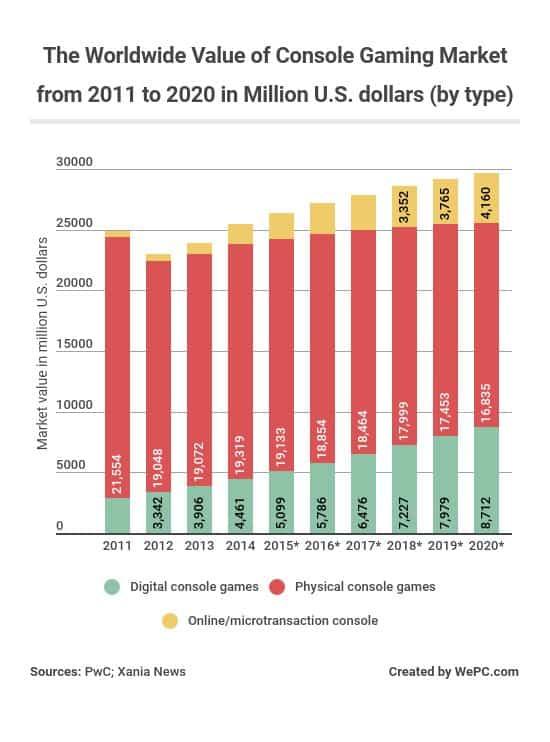
Reason #1: Since 2010, GameStop’s business model has been in decline due to a decrease in console unit sales, weak pricing power, the increasing popularity of digital downloads, and the decreasing value of used games. In the past decade, many retailers have struggled to survive, and even specialized private equity groups that have tried to revitalize the retail industry have ultimately failed. Many retail giants, such as Bonwit Tellers, Incredible Universe, and Kids “R” Us, have either disappeared or significantly downsized. Millennials may enjoy nostalgicically reminiscing about the 90s, but they are not likely to shop at GameStop due to its high prices, inconvenient locations, unethical business practices, and lack of authenticity. All niche communities are built on authenticity, and when GameStop changed its name and business model, it lost that authenticity as well.

Management has speculated that the release of new gaming consoles will help to boost sales in 2020. However, in the most recent quarter of 2019, GameStop’s CEO, George Sherman, was surprised by the steep decline in sales. There are now too many GameStop stores, and new and used games can be found much cheaper elsewhere. Some bullish investors believe that GameStop will automatically recover sales through the new gaming console cycle. However, over half of GameStop’s console market opportunities have vanished between 2008 and 2020. In 2008, a total of 90 million consoles were sold worldwide, while estimates for 2020 range from 30 to 40 million.

Overview

The Global Unit Sales of Current Generation Video Game Console in million units (2008 to 2017)Infogram.

  • Used games are becoming less valuable each year, while digital downloads are becoming more popular. Used games are still a significant source of income for GameStop, but its sales in that category have declined every year since 2011. In 2019, Sony sold over half of its games through downloads. Microsoft, Nintendo, and Google have all invested heavily in online gaming.

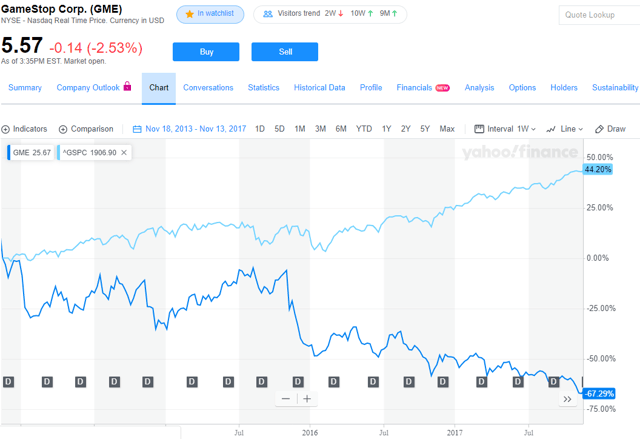
Playstation 4 was released on Nov 15, 2013. GME stock from Nov 2013 to Nov 2017 is -67%

  • GameStop’s supply chain and marketing tactics are some of the worst in the retail industry: They do not offer free shipping unless the total purchase is over $50, while their competitors are upgrading their businesses with robotics, software, and logistics innovations
  • Corporate culture is toxic, and the business execution is mediocre: The gaming community is well aware of GameStop’s deceptive business practices. It is unclear what could make GameStop more successful than its competitors. In fact, it seems highly unlikely that the company’s management plan could result in success.
Image result for gamestop fail"
  • Weak pricing power: New and popular games from other retailers are often discounted 10% less than Gamestop’s prices, and customers who use the retailers’ branded credit cards receive an additional 5% off. Additionally, used games can be found more cheaply on platforms such as eBay, Facebook, and Craigslist.
    • GameStop cannot compete against cheaper alternatives: Major retailers are willing to take losses on gaming discounts in order to build brand loyalty and make up the difference with higher-margin products. GameStop has therefore resorted to offering creative membership deals that may mislead customers into paying more for used games.
    • Used cheap games are recession-proof, not expensive used games: During a recession, consumers tend to look for the cheapest options rather than paying more for discretionary goods. Therefore, GameStop’s trade-in value may not make economic sense to many customers, as they can get a better value for their games through online retailers or platforms such as eBay, Facebook, or Craigslist. There are multiple ways to sell and buy games online that are more convenient and have considerably better prices.  The cost of shipping video games is really affordable, and you will still make more money selling games on eBay than you would at GameStop.
  • It’s not convenient to drive to a game store. Furthermore, it is more convenient for customers to buy games from larger retail stores where they can also purchase other items, rather than making a special trip to a game store. The supply of used video games is plentiful and it is easy to find popular titles from other marketplaces.
  • Lack of Customer Service & Knowledge GameStop’s customer service and knowledge may also be lacking, as the company has unrealistic sales goals and uses forceful sales tactics. Its membership points system may also be confusing and misleading.

2. History of Poor Capital Allocation – Low ROIC, no investment in business and waste of share buybacks.

  • Aggressive share buyback won’t work: GameStop’s aggressive share buyback strategy has been ineffective since 2010, costing the company over $400 million in share repurchases. This amount does not include the additional $120 million in buybacks from 2019. A company should only repurchase shares if it has sufficient funds to support its operations and the stock is selling at a significant discount to its calculated intrinsic value. However, GameStop is projected to run out of cash by the end of the year and will have to rely on high-interest credit to finance its operations.
  • Liquidity Fallacy: The “liquidity fallacy” argument, which suggests that as long as customers continue to shop at GameStop, cash flow is not an issue, is flawed. While investor Michael Burry is well-versed in liquidity and cash flow, he and other investors failed to consider the cultural significance of the gaming community to GameStop’s business. Customers are the most important asset on GameStop’s balance sheet, not dollars. Just as Sears had enough liquidity to implement a turnaround strategy, but ultimately failed due to a lack of customer demand, cutting costs too deeply can negatively impact the customer experience and ultimately hurt the company’s financial performance.
  • Fallen ROIC since 2014: Despite GameStop’s falling return on invested capital (ROIC) since 2014, due to a lack of significant investments in the business in recent years, Burry still identified it as one of his top investment ideas. It is unsurprising that investors may believe their skills and knowledge are transferable across industries, but in the constantly evolving world of gaming and retail, it is important to carefully assess all factors that could impact a company’s success.
Historical 10 year ROIC of GME

3. Proposing unproven Strategies – gaming events, retro games, and merchandise will not replace the loss of used games revenue.

  • Store gaming events are not proven strategies: Management has not provided information that shows gaming store events could create profitability. Most GameStop stores are simply too small for hosting gaming events. GameStop had a press release about their gaming events in Spring 2019, and it has been quiet ever since.  GameStop probably has already failed its first gaming event attempt. The best gaming hosts in the industry are only mildly successful.
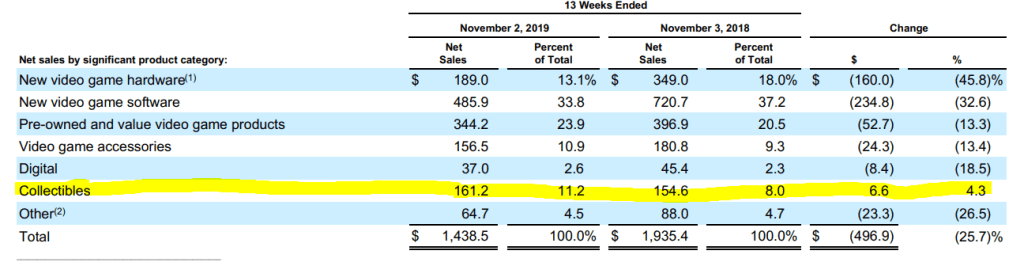
  • Increasing retro and rare game sales will not stabilize revenue: Rare games sell on eBay at a much lower price than GameStop trade-in value. Collectible games will slow down the turnover inventory and they will take up shelf space from other, newer products.

Shifting sales to nongaming merchandise will turn GameStop into another commodity store: GameStop owns the ThinkGeek store that sells nongaming merchandise and its sales are going down too. GameStop eliminated the position of Chief Operating Officer (COO) and in recent months has begun to switch some of its business models toward collectibles and trading merchandise. In other words, GameStop is basically converting its store into another failing business: its sister brand ThinkGeek. GameStop’s best non-selling items are Bubbleheads that are made by Funko.  Gimmicky products like Bobbleheads are the beanie baby 2.0… Bobbleheads have high-net income margins, but it doesn’t add any value to GameStop. GameStop may get some foot traffic from Bobbleheads, socks, T-shirts, and other random merchandise, but total sales are simply not good enough to offset their declining game sales. In the early 90s, trading card stores attempted to switch from baseball cards to other popular merchandise, but eventually, the hobby store industry disappeared.

Gamestop is hoping for Collectibles to turnaround the company

Valuation Verdict:
GME at its best would be worth $5/Share, assuming a small decline of -2% revenue CAGR and an average 3% EBITDA Margin.  Bullish investors estimate GameStop valuation between $6 to $10, but it doesn’t require complex math to explain GameStop’s valuation. Analysts are overcompensating on complex valuation because they believe used video games can be a sustainable business model. The next 12 months will be critical for GameStop to improve its revenue or else the stock price will take a nose dive. 

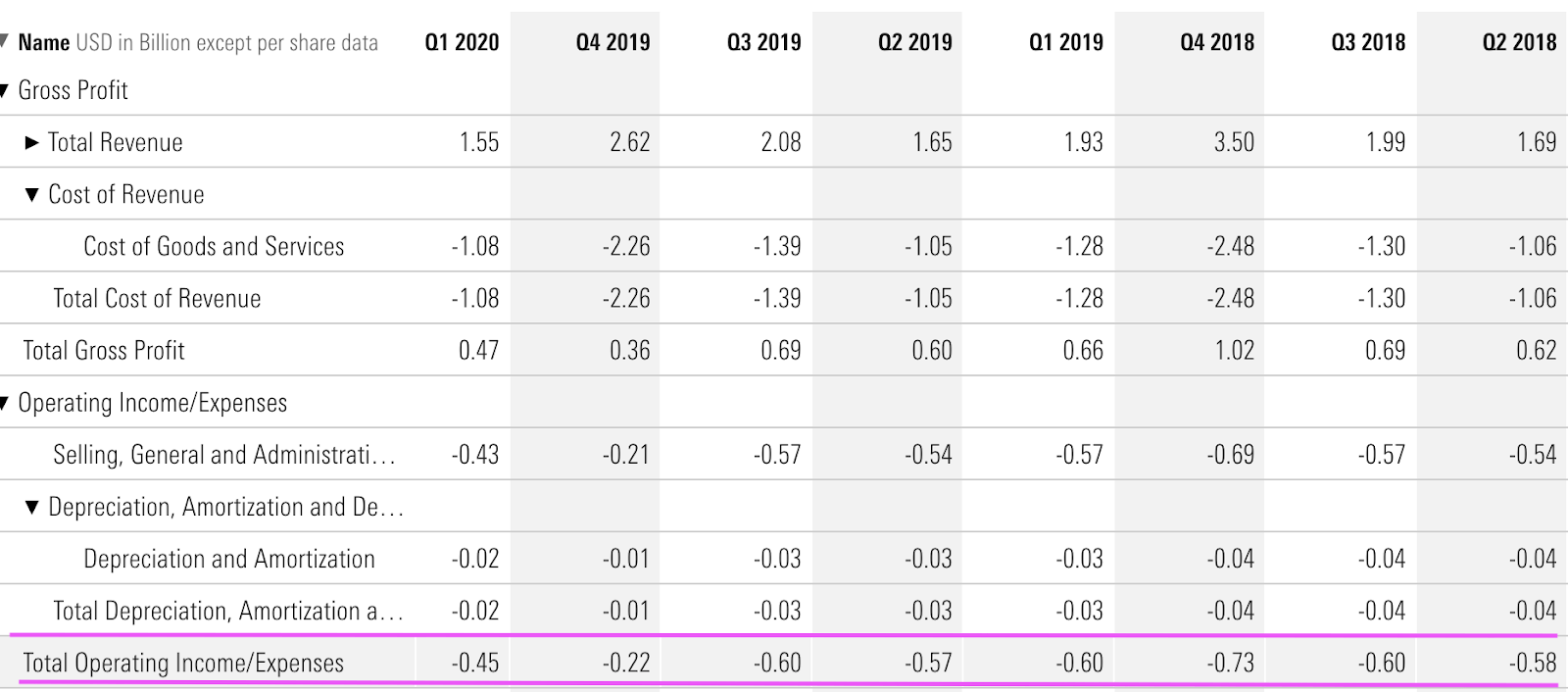
GameStop has less than one year to prove to investors that they can stabilize and improve sales. GameStop currently holds $290 million in cash and $419.4 million in debt. GameStop has had many years to turn around the company, but they have just burned through cash to buy back a company that offers customer zero value. Buybacks are great if the company is greatly undervalued and if it receives enough funds to support both business operations and buybacks. In GameStop’s case, it only has adequate money to pay down debt or buy back shares.

GME will drop to $3 again and become a penny stock in the next two years. Private Equity dry powder is at an all-time decade high, and there is still no offer for GameStop. Based on the last 4 quarters, GME is projected to lose a minimal of $160M to $200M in 2020.

Conclusion:

The existence of GameStop came from the void of the used game market. The industry has evolved and that used game void is available through multiple channels that offer cheaper prices and better value.

A new generation of game consoles is arriving later this year, buying GameStop sometime to hold out. The question remains, how much longer can GameStop’s business model remain relevant in a fast-growing digital distribution era? Get ready to say Rest In Peace, as GameStop will join its non-innovative retail family members in bankruptcy shortly.

Can’t stop, won’t stop, Gamestop selling drops ’cause it, it gets down baby, it gets down baby

The GameStop, gameflop, and StockDrop